

Prevent Detergent Buildup in Washer: 7 Fixes That Work
Table of Contents
- Why Detergent Build up Happens in UK Washing Machines
- Signs of Too Much Laundry Detergent You Shouldn't Ignore
- How to Stop Smelly Washing Machines Caused by Residue
- How to Use a Laundry Pod Holder for a Cleaner Wash
- How to Remove Existing Detergent Build up from Your Drum
- Prevention Habits That Keep Your Washer Residue-Free
- Frequently Asked Questions
Last Updated: 21 September 2026
Why Detergent Build up Happens in UK Washing Machines
Detergent build up is the chalky, sticky film left behind when washing powder or pods fail to dissolve fully during a cycle. It settles on the drum, the door seal and the heating element, and over time it traps dirt and bacteria. Here's what most guides get wrong: they blame the detergent. The real culprit is usually how the machine handles it.
Two things drive the problem.
How Cold Washes and Overdosing Create Residue
Cold cycles save energy, but cold water dissolves detergent more slowly than hot water. If you use too much product, or a powder that needs heat to break down, it never fully dissolves. Instead, it clings to fabrics and drum surfaces as a tacky paste.
A common mistake is filling the cap to the top "just in case." More detergent does not mean cleaner clothes. It means more residue.
How Your Machine's Design Traps Undissolved Detergent
Modern high-efficiency machines use less water per wash. Less water means less liquid to carry detergent away. Pods can also get stuck under the drum ribs or in the door seal, where they sit and slowly dissolve into a sticky mess.
The fix starts with understanding the machine, not just the soap. Once you know where residue hides, prevention becomes straightforward.
Signs of Too Much Laundry Detergent You Shouldn't Ignore
The signs of too much laundry detergent are easy to spot once you know them. Most people miss the early warnings and only notice when the machine starts to smell.
Watch for these:
- Stiff, scratchy towels that feel coated rather than soft
- White or grey streaks on dark clothes after a wash
- A musty or sour smell coming from the drum or door seal
- Clothes that feel greasy or slick to the touch
- Visible chalky film on the inside of the door glass
- Extra suds left sitting in the drum after the cycle ends
If you notice two or more of these, you are almost certainly using more detergent than the load needs. The good news is that it is fixable. The bad news is that ignoring it lets residue harden and feed odour-causing bacteria.
How to Stop Smelly Washing Machines Caused by Residue
To stop smelly washing machines, you have to remove the residue that bacteria feed on. Odour is a symptom, not the root problem. Kill the smell without clearing the build up and it comes straight back.
Here's the sequence that works:
- Run an empty hot maintenance wash with a washing machine cleaner or a cup of white vinegar in the drum.
- Wipe the door seal by hand, pulling it back to reach the trapped gunk.
- Clean the detergent drawer and its housing, then rinse thoroughly.
- Check and clear the filter at the bottom of the machine.
- Reduce your detergent dose and switch to a pod holder so pods dissolve fully.
Do this monthly and the smell rarely returns. Skip it and you are just masking the issue.
How to Use a Laundry Pod Holder for a Cleaner Wash
A laundry pod holder is a reusable accessory that keeps your pod in the right place so it dissolves completely. Instead of letting the pod fall loose and lodge under the drum ribs or in the seal, the holder keeps it in the flow of water. Washpodz offers a British-designed reusable holder built for exactly this job.
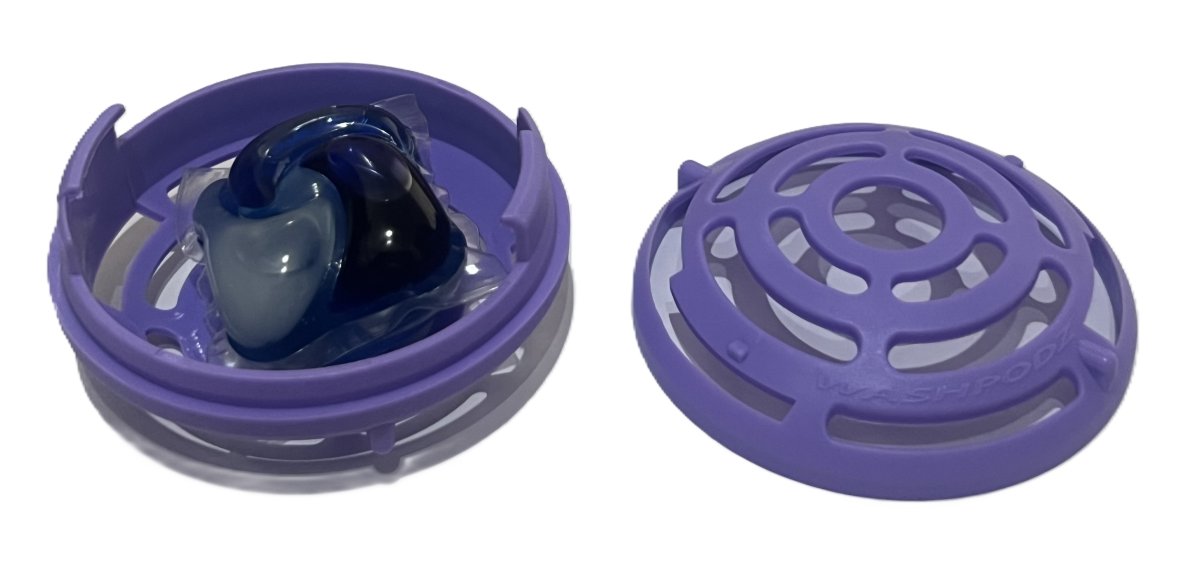
Using one is simple:
- Place the pod inside the holder before you load the drum.
- Put the holder at the back of the empty drum, not on top of clothes.
- Add laundry on top, leaving the holder free to be reached by water.
- Run your normal cycle, cold or warm.
The holder stops pods from getting stuck in machine seals and prevents the sticky residue that causes odours. It is reusable and built to last, so it replaces the guesswork with a repeatable routine.
Getting the Best Results in Cold Cycles
Cold washes are where pods struggle most. To get a full dissolve in cold water:
- Use no more than one pod per normal load.
- Don't overfill the drum; leave room for water to move.
- Choose a longer cold cycle if your machine offers one.
- Place the holder where water flows, not tucked in a corner.
If you are coming from loose pods, expect a short adjustment period. Within a few washes, the difference in residue is obvious.
How to Remove Existing Detergent Build up from Your Drum
Removing existing detergent build up takes a two-part approach: dissolve the film, then flush it out. You cannot fix a coated drum with a single wash.
Start with a hot maintenance cycle. Add a dedicated washing machine cleaner or white vinegar to the drum, not the drawer. Let the machine run its hottest, longest cycle with no clothes inside. This loosens the hardened film.
Then tackle the parts a cycle can't reach:
- Pull back the door seal and wipe every fold with a damp cloth.
- Remove the detergent drawer and scrub the housing behind it.
- Clear the pump filter and check for sludge.
- Run a second rinse cycle to carry loosened residue away.
For stubborn patches, a soft brush and warm soapy water work better than harsh chemicals. Repeat monthly until the drum runs clean.
Prevention Habits That Keep Your Washer Residue-Free
Prevention comes down to dose, temperature and placement. Get these three right and residue rarely builds up in the first place.
Build these habits into your routine:
- Measure detergent to the load size, never to the cap's maximum.
- Use pods with a holder so they dissolve fully and don't get trapped.
- Run a hot maintenance wash monthly.
- Wipe the door seal weekly.
- Leave the door ajar between washes so the drum dries out.
- Don't overload; water needs room to move.
Many households find that switching to a reusable pod holder removes the two biggest causes of residue at once: stuck pods and partial dissolution. It is a small change with a lasting effect.
For guidance on machine care and detergent use, the Energy Saving Trust advice on laundry and appliances is a useful starting point. For safety around cleaning products, check the NHS guidance on household cleaning safety. And for water and appliance efficiency, the Water UK information on water use at home is worth a look.
Detergent residue is one of those problems that quietly shortens the life of your machine and your clothes. The fix is not more detergent or stronger chemicals; it is using the right amount, in the right place, every wash. Washpodz makes a reusable, British-designed pod holder that keeps pods dissolving fully, prevents them getting stuck in seals, and protects your clothes from sticky residue and odours. Join thousands of UK households who've made Washpodz® their go-to laundry essential. Add to basket and take the guesswork out of every wash.
Frequently Asked Questions
What are the signs of detergent build up in a washing machine?
Look for white or grey chalky streaks on dark clothes after a wash, a slimy film inside the drum or on the door seal, and a musty or damp smell that lingers even after cleaning. You may also notice the dispenser drawer clogging with thick residue, or clothes feeling stiff and rough when they come out. These are the clearest signs of too much laundry detergent collecting inside the machine.
How often should I run a service wash to prevent residue?
Run a hot service wash every month if you wash mostly at low temperatures. Use a washing machine cleaner or a small amount of biological detergent on a 60°C or 90°C cycle with an empty drum. This dissolves the fat and detergent film that builds up during everyday cold washes. If you use laundry pods, check the drum and seal weekly for any undissolved residue before it hardens.
Can detergent build up cause clothes to come out smelling musty?
Yes. Undissolved detergent and fabric softener leave a sticky film inside the drum and seal that traps dirt and bacteria. That film is what produces the damp, musty smell on supposedly clean clothes. Removing the build up and switching to a laundry pod holder, which helps pods dissolve fully, stops the residue from forming in the first place.
Will a laundry pod holder actually help if I mostly wash in cold water?
A pod holder keeps the pod in the water flow instead of letting it stick to the drum or seal, which is where cold washes often leave it undissolved. It also stops the pod getting trapped in clothes, so the detergent releases properly. For cold cycles, place the holder at the back of the empty drum before adding laundry, and avoid overloading so water can circulate freely.