

How to Stop Smelly Washing Machines: A 2026 Guide
Table of Contents
- Why Your Washing Machine Smells (and What's Causing It)
- The Residue Trap: Detergent, Fabric Softener and Pods
- Rotten Egg Smells, Damp Traps and Standing Water
- What You'll Need Before You Start
- Step 1: How to Clean the Washing Machine Seal Properly
- Step 2: How to Remove Laundry Pod Residue from Clothes and the Drum
- Step 3: Run a Hot Maintenance Cycle
- Washing Machine Service Wash Frequency: How Often Is Enough?
- Common Mistakes That Keep the Smell Coming Back
- Preventing Smells Between Washes
- Frequently Asked Questions
Last Updated: September 15, 2026
Why Your Washing Machine Smells (and What's Causing It)
If your clean laundry comes out smelling worse than it went in, you are not alone. Learning how to stop smelly washing machines starts with understanding one uncomfortable truth: smelly washing machines are not dirty because you neglect them. They are dirty because modern washing habits quietly encourage bacterial growth.
Cold cycles, concentrated detergent and sealed drum designs all save energy and water. They also leave behind a film of undissolved detergent, body oils and softener that never fully rinses away. That film is a food source, and damp, warm interiors are the perfect place for it to thrive.
This guide from Washpodz breaks down the causes, then walks through a practical cleaning routine you can complete this weekend. We will also cover the maintenance habits that keep odours from returning.
The Residue Trap: Detergent, Fabric Softener and Pods
Residue is the single biggest cause of lingering odours. Detergent manufacturers formulate products for a range of water hardness and load sizes, but most households dose by habit rather than by weight. When you overfill the drum or run a short, cool cycle, that excess detergent has nowhere to go.
Fabric softener makes things worse. It coats fibres with a waxy layer that traps moisture, and that same coating builds up inside the drum and pipework. Over time, the machine develops a slimy biofilm that holds odour.
Laundry pods add another layer of complexity. Pods are designed to dissolve fully, but in a cold, short or lightly loaded wash the outer film can fail to break down completely. The result is sticky residue that clings to the drum, the seal and sometimes your clothes. A reusable pod holder, like the one Washpodz designs, keeps the pod in the water flow rather than letting it lodge under the drum ribs or against the door seal, which helps it dissolve properly every time.
Rotten Egg Smells, Damp Traps and Standing Water
A rotten egg smell points to something different: stagnant water and anaerobic bacteria. Every front-loading machine has a drain filter and a sump area where a small amount of water always sits. If lint, hair and detergent sludge collect there, that water turns foul.
The door seal is the other culprit. Its folded shape traps water after every wash, and if the door stays shut between cycles, that trapped moisture never dries. Combined with warmth from the machine, it becomes a breeding ground.
If the smell is genuinely egg-like and persistent, check the drain hose for kinks and confirm the machine is draining fully. A washer that never empties completely will always smell, no matter how often you clean it.
What You'll Need Before You Start
Gather your supplies before you touch the machine. You will need:
- Rubber gloves
- An old toothbrush or small detailing brush
- A microfibre cloth and a second dry cloth
- White vinegar or a dedicated washing machine cleaner
- Bicarbonate of soda
- A shallow bowl or tray for the filter
- A torch, for inspecting the seal fold
Set aside around an hour for a full clean. Check your machine's manual first, since some manufacturers specify particular cleaning products or warn against certain chemicals for specific components.
Step 1: How to Clean the Washing Machine Seal Properly
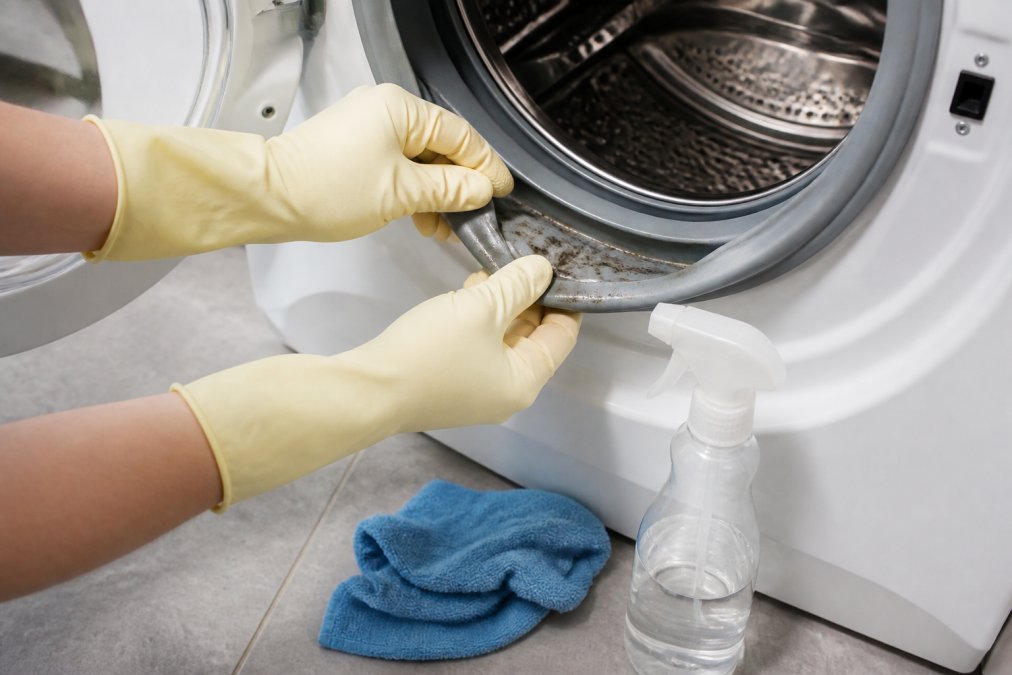
To clean the washing machine seal, pull the rubber lip back all the way around the door and work into the fold with a cloth, not just across the surface. This is where the vast majority of odour-causing grime hides.
Start by unplugging the machine. Pull the seal back gently and inspect the whole circumference with your torch. You will usually find dark sludge, lint and sometimes small items like hair grips or coins trapped in the lower section.
Wipe out the loose debris first with a dry cloth. Then mix a paste of bicarbonate of soda and a little water, apply it to the grime with the toothbrush, and work it into the fold. Leave it for a few minutes, then wipe clean with a damp cloth and dry thoroughly.
Do not use neat bleach on rubber seals unless the manufacturer explicitly permits it (Health and safety basics for your business). Bleach degrades the rubber over time, causing cracks that trap even more water and grime.
Cleaning the Detergent Drawer and Filter
The detergent drawer pulls out on most machines, usually after pressing a release tab. Soak it in hot water with a spoonful of bicarbonate of soda, then scrub the dispenser housing behind it, since softener residue builds up there too.
The drain filter sits behind a small panel at the bottom front of most machines. Place your bowl underneath before opening it, because it will release water. Remove lint and debris, rinse the filter, and screw it back firmly.
Step 2: How to Remove Laundry Pod Residue from Clothes and the Drum
To remove laundry pod residue, run the affected items through a warm rinse cycle without any detergent, then inspect the drum for the same sticky film. Pod residue shows up as a stiff, slightly tacky patch, often on dark fabrics where it looks like a chalky smear.
For clothes, a second rinse with a splash of white vinegar usually lifts it. Do not add more detergent, since that simply adds to the problem. If the residue has dried in, soak the garment in warm water for half an hour first.
Inside the drum, wipe the ribs and the back of the drum with a damp cloth. Pay attention to the area just inside the door, where pods commonly lodge. If pods are regularly failing to dissolve, the fix is often mechanical rather than chemical: place the pod where water actually flows, not at the back of an overloaded drum.
That is exactly the problem Washpodz set out to solve. The reusable pod holder keeps the pod suspended in the water rather than pressed against fabric or trapped under a drum rib, so it dissolves fully even in cooler cycles. It is British-designed, reusable, and built to last rather than replaced every few weeks.
Step 3: Run a Hot Maintenance Cycle
A hot maintenance cycle is the reset your machine needs. Run an empty wash at the highest temperature the care label of your machine allows, usually 90°C for cotton cycles on many models, with either a dedicated washing machine cleaner or a cup of white vinegar in the drum (the NHS).
Do not add laundry. Do not add detergent. The point is to flush hot water through the drum, pipework and pump to break down the biofilm that normal cool washes leave behind.
Once the cycle finishes, wipe the seal dry, leave the door ajar, and clean the filter again if you have not already.
Washing Machine Service Wash Frequency: How Often Is Enough?
Use this as a quick reference:
| Your Washing Habits | Service Wash Frequency | Why |
|---|---|---|
| 1-3 loads per week, mixed temperatures | Monthly | Residue builds slowly |
| Daily washing, mostly cold | Every 2-3 weeks | Cold cycles leave more biofilm |
| Heavy softener or pod use | Every 2 weeks | Waxy and film residue accumulates faster |
| Pets, outdoor clothing or heavy soiling | Monthly plus filter check | More lint and debris in the system |
Common Mistakes That Keep the Smell Coming Back
Other frequent errors include:
Preventing Smells Between Washes
Frequently Asked Questions
Why does my washing machine smell like rotten eggs?
That sulphur smell usually comes from bacteria breaking down trapped detergent, fabric softener and lint in the drum, seal or drain filter. Cold washes make it worse because residue never fully dissolves. Run a hot maintenance cycle with a washing machine cleaner, clean the door seal and filter, and check the drain hose for standing water. If the smell stays after that, book an engineer to inspect the drain pump.
How do I get rid of black mould in my washing machine seal?
Pull the rubber lip back fully and wipe both sides with a cloth dipped in a diluted bleach or vinegar solution, then rinse. Wear gloves and ventilate the room. For stubborn patches, soak a cloth in the solution and leave it pressed against the mould for 30 minutes before scrubbing. If the seal is cracked or the mould has spread underneath, replacement is the only reliable fix. Leave the door ajar after every wash to stop it returning.
How often should I run a service wash?
Most households should run a hot service wash once a month. If you wash mainly at 30°C, use lots of fabric softener, or have a busy household with several loads a week, move to every three weeks. Light users who mostly wash at 60°C can stretch to every six to eight weeks. Add it to your calendar so it does not get forgotten, and always use a dedicated washing machine cleaner rather than laundry detergent alone.
Will a pod holder stop pods leaving residue on my clothes?
A pod holder keeps the pod in one place so it dissolves fully rather than sticking to clothes or under the drum ribs. That reduces the sticky film that traps odour-causing bacteria and leaves white marks on dark fabrics. It works especially well on cold cycles, where pods dissolve more slowly. Combine it with a monthly hot service wash and regular seal cleaning for the best results. Add to basket to try one for yourself.