

Ecoegg vs Laundry Pods: Which Works Best?
Table of Contents
- Ecoegg vs Laundry Pods at a Glance
- How to Prevent Laundry Pod Residue
- Laundry Pod Holder Benefits
- Cost Comparison of Laundry Detergents
- Environmental Impact: Ecoegg vs Laundry Pods
- Which Option Works Best for Your Household?
- Conclusion
- Frequently Asked Questions
Last Updated: September 25, 2026
Ecoegg vs Laundry Pods at a Glance
When it comes to ecoegg vs laundry detergent pods, the choice comes down to what matters most to your household: convenience, cost, environmental impact, or solving specific washing problems. Laundry pods dominate UK supermarket shelves for their simplicity, grab one, toss it in, done. But they come with a well-known catch: incomplete dissolution, sticky residue on clothes, and pods getting trapped in machine seals. Ecoegg offers a reusable alternative system that eliminates single-use packaging entirely. Neither is universally "best", it depends on your washing habits, water temperature, machine type, and priorities.
Here's what matters most: many households face the same core problem with traditional pods. They don't dissolve properly in cold water, they get stuck under drum ribs, and they leave white chalky marks on dark fabrics. This guide from Washpodz covers the real differences between these approaches, and introduces a third option that solves the residue problem without abandoning pods altogether.
|
Aspect |
Laundry Pods |
Ecoegg |
Washpodz Pod Holder |
|---|---|---|---|
|
Initial Cost |
£2-5 per box |
£20-30 upfront |
£8.25 one-time |
|
Reusable? |
No |
Yes |
Yes |
|
Packaging Waste |
Plastic per pod |
Minimal (refillable) |
None (reusable) |
|
Works in Cold Water |
Often problematic |
Reliable |
Ensures full dissolution |
|
Prevents Residue |
No |
Yes |
Yes |
|
Compatible with Existing Pods |
Yes (if they work) |
Requires Ecoegg system |
Yes, any pod |
How to Prevent Laundry Pod Residue
Incomplete pod dissolution is the most common complaint about laundry pods. The pod's outer membrane doesn't break down fast enough, particularly in cold water cycles, leaving behind sticky residue that transfers onto your clothes and builds up inside your machine.

The root cause is water temperature. Pods are engineered to dissolve at warmer temperatures. Cold water cycles, which many households use to save energy, slow down the dissolution process dramatically. Even in warm water, if your machine's water pressure is low or the pod gets wedged under the drum, it won't dissolve completely.
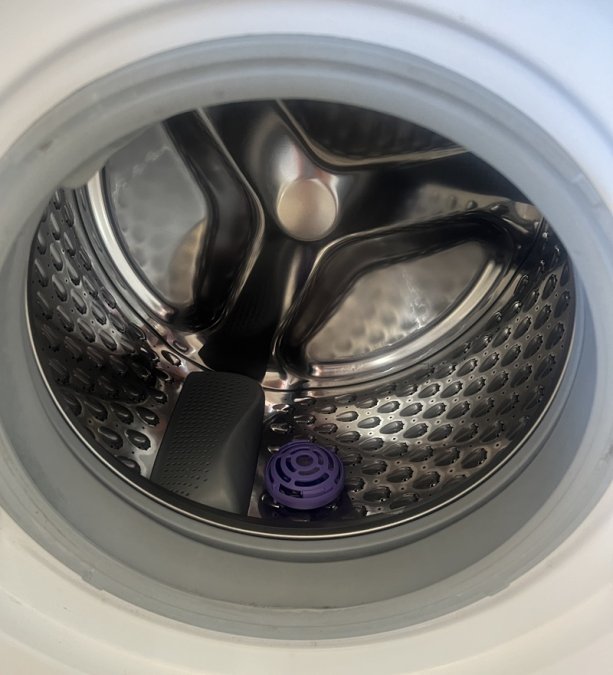
The practical fix is simple: use a pod holder. A quality pod holder keeps the pod suspended in the drum where water can circulate around it fully, rather than letting it get trapped or pressed against fabric. Washpodz's reusable pod holder costs £8.25 and works with any standard laundry pod. You simply place your laundry pod inside, twist to lock securely, and drop it in the drum with your clothes and wash as normal! The design ensures water reaches every surface of the pod, so it dissolves completely, even in cold water.
This approach solves three problems simultaneously: you eliminate residue on clothes, you prevent pods from getting stuck in machine seals, and you stop the white chalky marks that appear on dark fabrics. The holder is reusable, recyclable, and built to last, so you're not adding to packaging waste. Join thousands of UK households who've made Washpodz® their go-to laundry essential, eliminating the need to rewash loads because detergent residue no longer transfers onto clean clothes.
Laundry Pod Holder Benefits
A laundry pod holder isn't just about preventing residue, it changes how your washing machine actually works. By controlling where the pod dissolves, you gain several practical advantages that standard pods alone can't deliver.
Protection for your clothes. Pods left loose in the drum can press directly against fabrics, especially delicate items. The concentrated detergent can bleach or damage certain materials. A holder keeps the pod suspended away from clothes, so detergent distributes evenly through the water rather than concentrating on one spot.
Prevents machine damage. Pods getting stuck under the drum seal or in the rubber gasket create two problems: the pod doesn't dissolve, and it can damage the seal over time. This is particularly common in high-efficiency machines with tight seals. A pod holder eliminates this entirely by keeping the pod in the drum where it belongs.
Works with your existing detergent. You don't need to switch to a new system or buy special pods. Any standard laundry pod works inside a holder. This matters if you've found a pod brand you like, you can keep using it and simply improve how it performs.
Solves cold water problems. If your household relies on cold water washes for energy savings, a pod holder ensures those washes actually work. The improved water circulation around the pod means better dissolution even at lower temperatures, so you get clean clothes without rewashing.
Reusable and sustainable. Unlike individual pods, a quality holder lasts for hundreds of washes. Washpodz holders are reusable, recyclable, and built to last. This reduces your household's laundry-related plastic waste significantly.
Cost Comparison of Laundry Detergents
When comparing costs, most people focus only on the upfront price per wash. That's incomplete. The real cost includes wasted detergent, rewashing due to incomplete dissolution, and machine maintenance.
Standard laundry pods typically cost between £2 and £5 per box, depending on the brand and where you buy. A box usually contains 20-35 pods, so the per-wash cost ranges from roughly £0.06 to £0.25. This seems cheap until you factor in waste. If your pods don't dissolve completely, you're paying for detergent that doesn't actually clean your clothes, it just sits on them as residue. If cold water cycles leave pods undissolved, you rewash, which doubles the cost of that load plus water and energy expenses.
Ecoegg laundry systems cost between £20 and £30 upfront for the starter kit, which includes the reusable pod and refill pellets. The refills cost roughly £8-12 and last around 50 washes, bringing the per-wash cost to approximately £0.16-£0.24. The advantage is packaging waste elimination and reliability, Ecoegg's system dissolves consistently regardless of water temperature. However, you're locked into their product ecosystem. You can't use other pods or detergents inside an Ecoegg.
Washpodz pod holders cost £8.25 as a one-time purchase and work with any laundry pod you choose. This means you get the dissolution benefits of a holder without changing which detergent you buy. If you're already buying pods at £0.06-£0.25 per wash, adding a holder costs nothing per wash, it's a one-time investment that pays for itself by eliminating rewashes within the first few months.
The cost advantage of a pod holder becomes obvious when you calculate rewash frequency. If cold water cycles cause you to rewash loads, you're spending extra on wasted detergent, water, and energy. A holder eliminates that waste.
According to Energy Saving Trust guidance on washing machine efficiency, cold water washes can reduce energy costs, but only if the detergent actually works. Incomplete dissolution negates the savings.
Environmental Impact: Ecoegg vs Laundry Pods
The environmental case for each option is clearer than the cost case, though neither is perfect.
Standard laundry pods generate significant single-use plastic waste.
Which Option Works Best for Your Household?
The answer depends on five specific factors. Work through each one to find your best fit.
Conclusion
The ecoegg vs laundry pods comparison isn't about one being objectively better, it's about matching the solution to your specific problem. Laundry pods remain convenient and affordable if your machine handles them well. Ecoegg offers a complete alternative that eliminates packaging waste. Washpodz pod holders solve the residue and dissolution problem for £8.25, making them the practical choice for households frustrated with how pods perform.
Frequently Asked Questions
Can a laundry pod holder really prevent residue from building up on clothes?
Yes. A pod holder keeps the pod contained and moving freely in the drum, ensuring even water circulation around it during the entire wash cycle. This allows the pod to dissolve completely rather than getting trapped under drum ribs or stuck in clothing folds, which is where sticky residue typically forms. Even in cold water washes where dissolution is slower, the holder's design promotes consistent contact with water, reducing incomplete dissolution that leaves white residue on fabrics.
How do ecoegg and laundry detergent pods differ in how they clean?
Ecoegg uses mineral-based pellets inside a plastic egg that release as the egg tumbles during washing. Laundry pods are pre-measured capsules of liquid or powder detergent that dissolve in water. Pods typically dissolve faster in hot water but can struggle in cold washes, whilst mineral-based eggs work across all water temperatures. Pods deliver concentrated detergent upfront; eggs release their pellets gradually throughout the cycle.
Is an ecoegg cheaper than using laundry pods over a year?
Generally, an ecoegg can be more economical over a year due to its reusable nature and refill system, despite a higher upfront cost compared to a single box of laundry pods. Laundry pods offer convenience but can cost more per wash when calculated over time, especially if rewashing is needed due to incomplete dissolution.
Are laundry detergent pods bad for the environment?
Laundry pods generate plastic waste from their capsule casing, and this is a genuine environmental concern. However, they're also concentrated, meaning less packaging per wash compared to liquid detergent bottles. The real issue arises when pods don't dissolve completely—undissolved residue can pass into waterways. Ecoeggs produce less packaging waste because the egg is reusable, though they still require plastic. Using a pod holder like Washpodz ensures complete dissolution, reducing water pollution from detergent residue.